Understanding Baby Bottle Tooth Decay and How to Prevent It
Putting your baby to bed with a bottle of milk or juice every night is one of the most common things parents do, and one of the most damaging things you can do to their teeth.
Baby bottle tooth decay, also called early childhood caries (ECC), is a pattern of rapid decay in infant and toddler teeth caused by prolonged exposure to sugar-containing liquids. It can progress much faster than most parents realize.
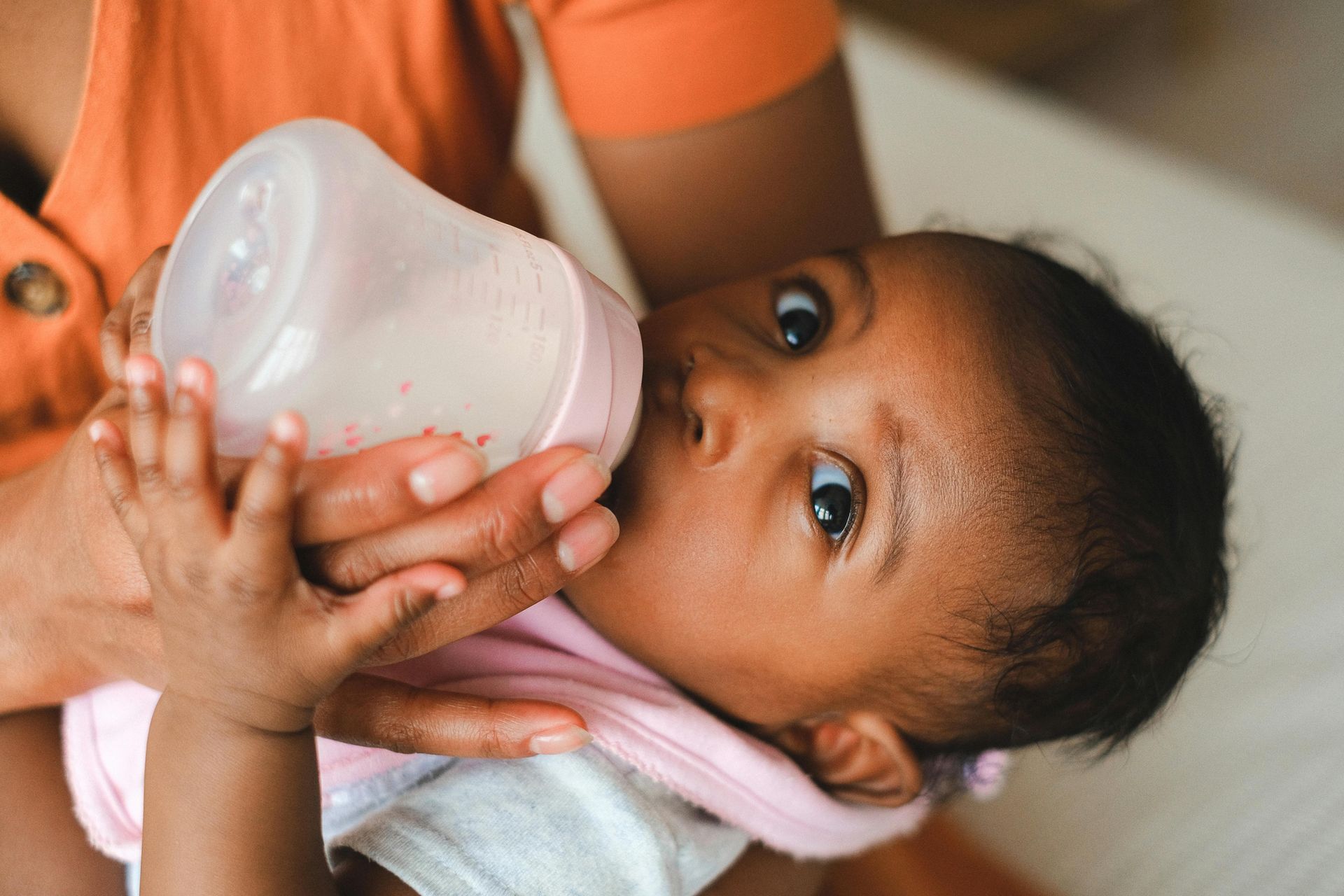
The name is a bit misleading. Breast milk, formula, and juice carry the same risk as bottle milk. What actually matters is how long teeth stay in contact with those liquids, particularly during sleep or extended feeding sessions.
What Is Baby Bottle Tooth Decay?
Here is the basic mechanism: liquid pools around teeth while a child feeds or drifts off to sleep. Bacteria in the mouth feed on the sugars in that liquid and produce acid, which breaks down tooth enamel. At night, saliva flow slows significantly, removing one of the mouth's natural defenses against decay. The result is damage that can progress faster than most parents expect.
The first visible sign is usually a white spot on the upper front teeth. Left untreated, those spots darken to brown or black, and the decay spreads.
If you are reading this because you noticed something on your child's teeth, or because a dentist recently flagged a concern, take a breath. This condition is common. It affects families who are doing everything else right, and catching it at any stage gives you real options.
The
Sweet Tooth team in Overland Park sees this regularly and is easy to reach if you want to talk through what you noticed before scheduling anything.
Why Baby Teeth Are Worth Protecting
"They're just baby teeth" is something almost every parent has said at some point, and it's an understandable thought. Those teeth fall out eventually, so how much could they really matter? Quite a bit, as it turns out!
Primary teeth guide how children learn to form sounds and words, support proper chewing, and hold space in the jaw so permanent teeth have room to come in correctly. They are placeholders with real responsibilities.
Decay is also a bacterial infection, and it does not stay contained to one tooth. Left untreated, it spreads below the gumline. Children who develop early childhood caries are roughly three times more likely to experience decay in their adult teeth. The bacteria and habits that cause damage early tend to stick around for a long time.
Losing a baby tooth prematurely creates its own set of problems. Neighboring teeth drift into the empty space, and that crowding often leads to orthodontic treatment that could have been avoided entirely.
There is also the day-to-day reality to consider. Advanced decay causes pain, and infants and toddlers have no way to tell you their mouth hurts. Disrupted sleep, pulling away during meals, and general fussiness are often the only signs something is wrong. That alone is reason enough to take early dental care seriously.
Treatment Options: From Early Intervention to Restorative Care
How your child's dentist approaches baby bottle tooth decay depends entirely on how far the decay has progressed. Catching it early means simpler, less invasive treatment. Waiting often means more involved care. Here is what that spectrum actually looks like.
Fluoride Treatment and Silver Diamine Fluoride (SDF)
At the earliest stage, when white spots appear on the enamel but a true cavity has not yet formed, remineralization is still possible. In-office fluoride varnish can strengthen weakened enamel and stop the process before it goes further. This is the window where the least intervention is needed, which is exactly why that first dental visit by age one matters so much.
Silver Diamine Fluoride is a different tool worth knowing about. It is a liquid applied directly to decayed areas that halts or slows decay without any drilling. For toddlers who are not good candidates for traditional treatment, or when decay needs to be stabilized quickly, SDF is a practical choice. There is a tradeoff, though: treated areas turn permanently black. Not harmful, but visible. Your dentist can help you weigh that cosmetic reality against the benefit of avoiding a more invasive procedure.
Fillings
When a cavity has already formed, the decayed portion of the tooth is removed and replaced with a tooth-colored filling. This restores both the structure and function of the tooth and is a routine part of pediatric dental care.
Dental Crowns
Extensive decay that cannot be fully addressed with a filling calls for a crown. Stainless steel crowns are the standard recommendation for baby teeth in this situation. They are durable, built to last until the tooth falls out naturally, and commonly placed after pulp therapy.
Pulp Therapy
If decay has reached the inner pulp of the tooth (the soft tissue at the center that contains nerves and blood vessels), pulp therapy removes the affected tissue to save the tooth. Parents sometimes hear this called a "baby root canal." The goal is preservation, not extraction.
Tooth Extraction and Space Maintainers
Extraction is a last resort, used only when a tooth cannot be saved. When a baby tooth is removed early, a space maintainer is placed to hold the gap open and prevent neighboring teeth from drifting. Without it, surrounding teeth shift into the space, creating crowding problems for the permanent teeth waiting underneath.
A quick note on comfort during treatment: some procedures, particularly for very young children or when multiple teeth are involved, are performed with nitrous oxide or pediatric sedation. Both are standard, safe tools in pediatric dentistry, and the team at Sweet Tooth is trained in both. If sedation is recommended for your child, that conversation will happen before any appointment, with time for your questions.
How to Prevent Baby Bottle Tooth Decay at Home
Prevention is simpler than treatment, and most of it comes down to a few consistent habits.
The single most important rule: never put a baby to bed with a bottle of milk, formula, juice, or any sweetened liquid. Saliva production slows significantly during sleep, and pooled liquid sits against teeth for hours. If your child needs a bottle to settle, water is the only safe option.
If dropping the bedtime bottle feels impossible, try a gradual approach. Over two to three weeks, slowly dilute the contents with more and more water until the bottle is water only. Most children adjust without much protest when the change happens incrementally.
The sippy cup deserves the same attention. A cup filled with milk or juice and carried around all day creates the same low-level sugar exposure as a bedtime bottle. Between meals, water is the right call.
A few other habits worth building early:
- Wipe your infant's gums with a clean, damp cloth before any teeth come in. Once that first tooth appears, switch to a grain-of-rice-sized smear of fluoride toothpaste and a soft infant toothbrush.
- Avoid sharing spoons, cups, or anything that transfers saliva. The bacteria responsible for tooth decay can pass from parent to child, sometimes before the child even has a single tooth.
- Book that first dental visit around your baby's first birthday. Early visits let a pediatric dentist catch white spot lesions before they turn into cavities, and they help your child grow comfortable with dental care from the start.
Small habits, started early, make a real difference.
Call a Pediatric Dentist
Some signs are easy to miss, especially with a child who cannot say "my tooth hurts." Look for white or brown spots on teeth, dark discoloration, visible pitting, or swelling near the gum line. A child who flinches eating cold or sweet foods, or who consistently chews on one side of the mouth, may be working around pain without anyone catching it.
Behavioral clues count too. Extra fussiness, disrupted sleep, or a sudden drop in appetite can all point to a tooth problem in a toddler who simply does not have the words for it.
If your child has not had a dental visit yet, the American Academy of Pediatric Dentistry recommends scheduling one by the first birthday. That visit gives a pediatric dentist a chance to catch early decay before it gets worse, and it helps your child build comfort with dental care from an early age.
Do not wait for the next routine appointment if something looks or seems off. Sweet Tooth offers emergency pediatric dental care in Overland Park for situations that need prompt attention.
The earlier you catch this, the simpler the fix.
If something on your child's teeth caught your attention, that instinct is worth following up on.
Call Sweet Tooth to schedule at your nearest location!
Quick Links
Schedule Appointment
Book your appointment at one of our Sweet Tooth locations today.
First Time Visit?
There is no need to fear, Sweet Tooth is here! Let us help you ease the worry that can come with visiting the dentist for the first time.
Why Parents Trust Sweet Tooth
Personalized Attention
Experience personalized attention for you and your child from our doctors with each visit.
An Open-Door Policy
We welcome parents in treatment areas to help your child feel comfortable.
Our Super Sweet Team
Our friendly team keeps visits smooth and always makes time to answer your questions.
We Speak English & Spanish
Se habla Español! We can communicate with our patients in both English and Spanish.
Recent Posts